
Learning to Tell the Story
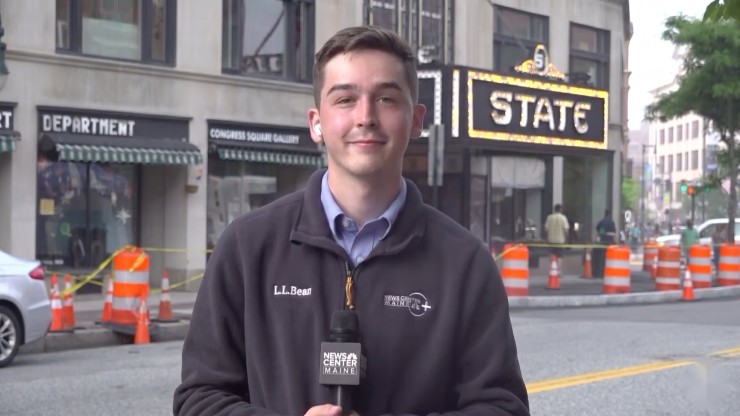
The first time Ryan Bell went on air at Dean College, it wasn’t part of a carefully mapped plan. It was simply part of the experience.
At Dean, students who want to get involved can do so right away. For Ryan, that meant stepping into the campus radio station early, learning by doing, and getting comfortable speaking to an audience long before it felt natural. Over time, those early reps built the confidence he still relies on today.
That pattern, step in, try it, get a little better the next time, followed him through his three years at Dean.
He arrived from Palmyra, Maine, a town small enough that most people knew each other by name. In high school, a new broadcasting program had given him his first glimpse of what storytelling could look like beyond the page. He came to Dean because it offered a way to keep that interest alive while still leaving room to figure things out. He played soccer, explored communications, and kept his options open.
What he found was range.
In one class, he might be writing a straightforward news piece. In another, producing audio. In another, experimenting with video and learning how to structure a story so it holds someone’s attention from beginning to end. The assignments were not all pointing in the same direction, and that was the point. They gave him space to test what felt natural and what didn’t.
There was guidance, but it rarely felt prescriptive. Professors like Greg Siebert, Vic Michaels, and John Rooke set a tone early. The tools were there, the expectations were clear, but what you did with them was largely up to you.
If you wanted to produce a news package, you could. If you wanted to try something longer and more narrative, you could do that too. The work was not hypothetical. It was meant to be made, shared, revised, and made again.
That kind of environment asks something in return. No one is going to build your portfolio for you. At some point, you have to decide to lean in.
For Bell, that realization came gradually. He kept saying yes to the radio station, to The Dean Daily, and to opportunities to get more reps, even when they were not required. Some of his internships ended up being in radio, not because he had planned it that way, but because he had enough experience to step into those roles when they appeared.
By the time he left Dean, finishing in three years, he had a body of work that reflected more than one interest and a clearer sense of direction. Broadcasting, specifically television, was where he wanted to go next.
Graduate school at Syracuse University followed. It was a step forward, but not a reset. The technical skills, editing, writing for broadcast, speaking on air, were already familiar. He was refining something that had been in motion for a while.
That foundation shows up in his work now, even if it isn’t always obvious.
As a general assignment reporter in Maine, his days are rarely predictable. One morning might begin at a city council meeting. By the afternoon, he is on a ferry heading to an island school to follow a high school basketball team that sleeps on gym floors during away games because travel costs leave no other option. The next day, he is sitting with someone navigating homelessness, listening long enough to understand not just the facts of the situation, but the texture of it.
He covers sports when it makes sense. He covers everything else, too.
What connects the stories is less the subject matter than the approach. He looks for the people closest to the experience. He spends time where things are actually happening. He pays attention to details that do not always make it into headlines but tend to stay with you longer.
That instinct was built over time through repetition and practice. It came from classes that asked him to find a story and figure out how to tell it in a way that felt real.
At Dean, that process starts early. Students are in front of microphones, behind cameras, and working in real formats long before they might expect to be. It can feel uncomfortable at first. Over time, that discomfort gives way to something closer to fluency.
Bell still points to the radio station as a turning point. Not because it was perfect, but because it gave him a place to practice without waiting for permission. The same could be said for much of his experience at Dean. The opportunities were there, and the expectation was that you would take them.
Looking back, he does not describe his path as especially linear. It was shaped by keeping options open long enough to recognize what mattered, and then narrowing in when the time came.
“You’re going to get a lot of guidance,” he said. “But you have to take advantage of the opportunities. They’re not going to come to you.”
By the time he wraps up the interview, he is already thinking about what comes next. Another story, another assignment, another set of questions to ask. The pace has not slowed, and it likely will not.
The throughline is easy to trace.
A first broadcast in a small campus studio. A few early chances to try, adjust, and try again. And a place that made it possible to begin before everything felt fully figured out.